


Your 2025 Moving Playbook: A Simple, Step-by-Step Guide to a Smoother Move
Moving is more than boxes and trucks — it’s a project that touches timing, money, logistics and feelings. This 2025 guide breaks the process into clear steps for planning, packing, moving day and settling in so you can cut stress and stay in control. You’ll find realistic timelines for local and long-distance moves, checklists for families and individuals, budgeting tips, and packing advice for fragile or specialty items. We also cover corporate relocation basics, eco-friendly packing options and how to protect valuables with smart inventory and insurance practices. Each section gives checklists and step-by-step actions, plus Hudson Valley-specific notes where they help. Follow these timelines and tools to reduce surprises, manage costs, and keep your time and belongings safe through the move.
How Do You Plan a Successful Move to a New City?
Successful city moves start with a timeline, a real budget, and a short prioritized checklist that keeps last-minute chaos away. Early decisions—like decluttering and choosing the right mover—save money and stress later. Gather required documents and permits early, build an inventory, and ask movers the right questions so estimates are accurate and expectations match. The timeline table below shows typical planning windows by move type and helps you choose when to book services and make final arrangements.
Different move types need different lead times, which affect when to book movers and arrange temporary housing.
| Move Type | Recommended Planning Window | Typical Focus |
|---|---|---|
| Local move (same metro area) | 2–6 weeks | Scheduling movers, utility overlap, neighborhood access |
| Long-distance move (regional) | 8–12 weeks | Carrier booking, shipment protection, routing options |
| Interstate/complex move | 12+ weeks | Permits, vehicle transport, specialty services coordination |
Starting early lowers cost and stress and makes it clear which tasks to prioritize for your distance and complexity. That prepares you for the time-bucket checklist that follows.
What Are the Essential Steps in a Moving To New City Checklist?
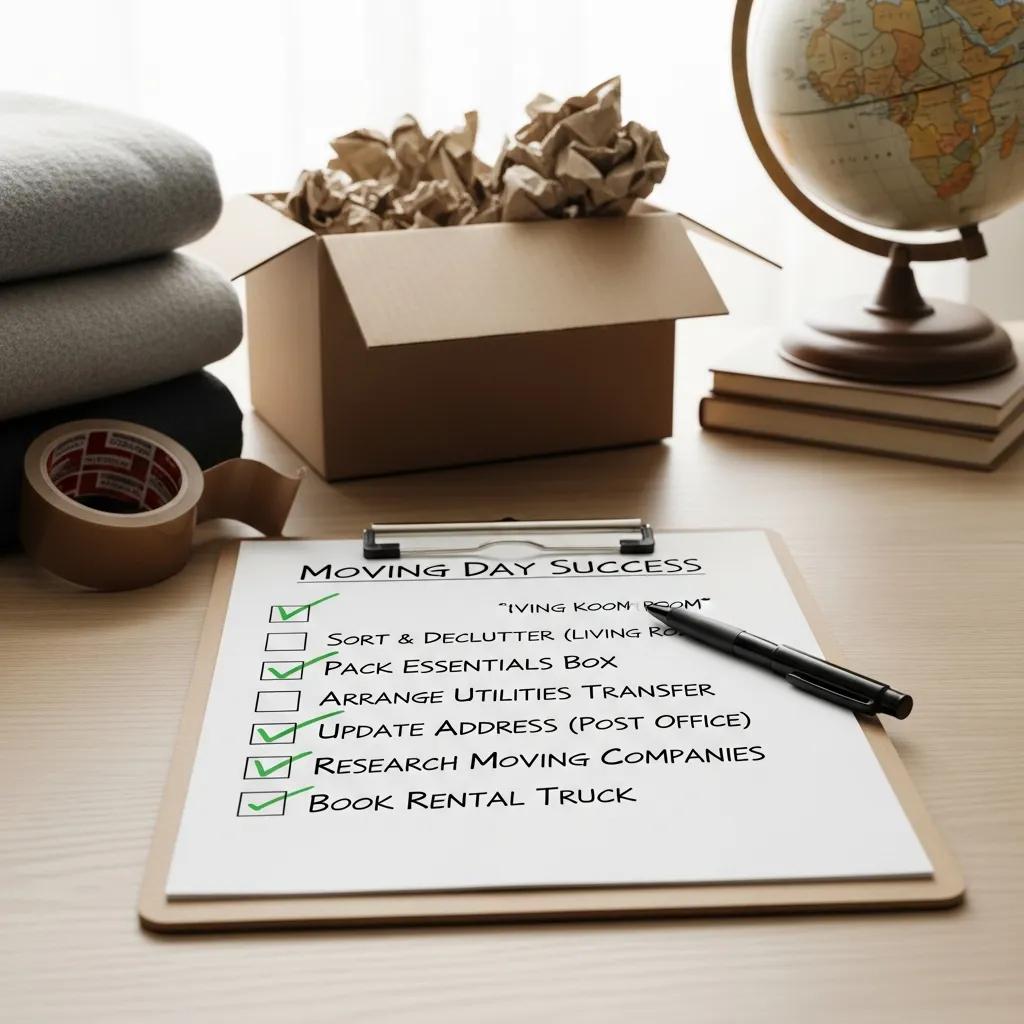
Turn planning windows into concrete tasks with a time-bucketed checklist so you can track progress and avoid missed deadlines. Begin 8+ weeks out with research and booking, move into packing and address updates at mid-range, and use the final week for confirmations and moving-day essentials. Don’t forget medical records, school paperwork and subscriptions — handling those early prevents headaches on move day. A clear checklist keeps everyone on the same page and cuts last-minute decisions that raise costs and stress.
- 8+ Weeks Out: Research neighborhoods, gather important documents, and book movers or storage.
- 4–6 Weeks Out: Declutter, start room-by-room packing, and notify key institutions of your move.
- 1–2 Weeks Out: Confirm carrier arrival windows, finalize inventory, and pack an essentials kit.
Using time buckets turns vague to-dos into measurable steps so you keep momentum and finish the necessary prep before moving day.
How Can You Budget Effectively for Your Relocation?
Budgeting well means separating direct moving costs from indirect expenses and adding a contingency for surprises. Direct costs cover mover labor, transport and packing supplies; indirect costs include temporary housing, deposits, lost work time and vehicle travel. Accurately estimating volume or weight and getting multiple written quotes helps you compare offers and avoid surprise fees. The table below gives a simple cost snapshot you can adapt to your situation.
Use this quick cost comparison to estimate ranges and decide where to spend for protection or convenience.
| Expense Category | Typical Cost Range | Notes |
|---|---|---|
| Local mover labor & truck | $300–$1,500 | Depends on size and hourly rates |
| Long-distance transport | $1,000–$5,000 | Weight and distance drive price |
| Packing materials & services | $100–$1,000 | DIY vs. professional packing changes cost |
| Temporary housing / deposits | $500–$3,000 | Varies by market and stay length |
Plan a 10–20% contingency to reduce financial stress and consider full-value protection for irreplaceable items. Once you have estimates, compare carriers and the types of quotes they provide.
Many people prefer a trusted local partner for hands-on help. 845 Move Now is a family-owned Hudson Valley moving company that handles local and long-distance moves, commercial projects, specialty items, packing and storage. Their clear estimates and flexible services make it easy to match your budget and priorities for a smoother move.
What Are the Best Practices for Long Distance Moving?
Long-distance moves require earlier planning, careful inventory, appropriate insurance and carriers with clear pricing and tracking. Book well in advance, photograph high-value items and note serial numbers, and check whether quotes are weight-based or flat-rate so you can compare fairly. Protecting items in transit and coordinating delivery windows reduces damage risk and downtime. The short checklist below highlights the highest-impact practices for long-distance relocations.
- Book early and confirm in writing: Reserve carriers and specialty handling weeks to months ahead to secure routes and dates.
- Document and photograph inventory: Record serial numbers and condition photos for valuable or fragile items before pickup.
- Understand estimate types and insurance: Know the difference between weight-based and flat-rate pricing and pick the right protection for your items.
- Coordinate delivery windows and temporary housing: Align carrier schedules with arrival plans to avoid storage or re-delivery fees.
These steps lower transit risk and give you leverage during carrier selection and any dispute. Below is a comparison of common service levels to help you choose what fits your move.
| Service Level | Typical Cost Range | Typical Benefits |
|---|---|---|
| Basic transport only | $800–$3,000+ | Economical, limited handling, lowest protection |
| Full-service carrier | $2,000–$7,000+ | Packing, loading, transport, basic protection included |
| Specialty handling & storage-in-transit | $1,500–$10,000+ | Crating, climate storage, vehicle or piano transport |
Higher service levels bundle labor and protection, which reduces coordination but increases cost. Pick a level based on your risk tolerance, item value and schedule flexibility.
How To Plan a Move Step By Step for Long Distance Relocation?
For long-distance moves, start months ahead with carrier selection and finish with a coordinated delivery and unpacking plan to keep your items safe. Request detailed written estimates that state inclusions and exclusions, schedule vehicle or specialty shipments early, and create a labeled inventory. Plan loading-day staging so essentials are easy to access on arrival. Clear communication and escalation contacts on both ends speed resolutions if problems arise.
- 3+ Months Out: Request estimates, verify credentials, and plan route and storage needs.
- 6–8 Weeks Out: Confirm bookings, arrange necessary permits, and finalize inventory.
- Delivery Window: Track the shipment, confirm an arrival slot, and inspect items on delivery.
A step-by-step approach aligns vendor tasks, personal prep and contingency plans so your long-distance move stays predictable.
Which Specialty Services Support Long Distance Moves?
Specialty services—piano moving, vehicle transport, antiques crating and storage-in-transit—protect nonstandard items and usually need certified crews and special equipment. These services add lead time and cost because of crating, rigging or climate-controlled storage. Vet providers by asking for experience with the item type, insurance for specialty handling, and examples of similar moves. Planning specialty services early prevents last-minute delays and protects fragile or high-value possessions.
- Piano and large instrument moving: Needs trained crews and custom rigging to protect the instrument.
- Vehicle transport: Choose enclosed or open carriers based on protection needs and budget.
- Crating and climate-controlled storage: Best for antiques, artwork and humidity-sensitive items.
When specialty services are required, build extra lead time and cost into your schedule so delivery and installation happen smoothly without surprise storage fees.
Many households and organizations also consider professional packing to reduce risk; the next section covers packing best practices and greener options.
How Can Corporate Relocation Services Simplify Your Business Move?
Corporate relocation services centralize logistics, cut downtime and support employees through coordinated scheduling, asset protection and tailored benefits. Professional corporate movers assign project managers, use specialized equipment for office moves, and can work off-hours to keep your business running. Employer relocation programs often include household move allowances, temporary housing help and orientation resources to shorten ramp-up time. The tips below help HR and facilities teams structure an RFP and measure vendor performance.
- Centralize project management: Use a single vendor contact to coordinate timelines, IT moves and asset inventories.
- Define service-level expectations: Spell out packing, equipment handling, insurance and downtime limits in contracts.
- Include employee support: Offer temporary housing, family assistance and settling-in help to boost retention.
These steps keep operations running and show employees the company supports them through relocation. The next section looks at employee-facing benefits in more detail.
What Benefits Do Corporate Relocation Programs Offer Employees?
Corporate relocation programs mix logistical support with human-centered benefits to reduce the personal cost and time of moving, improving satisfaction and retention. Typical elements include professional packing and unpacking, temporary housing assistance, household goods coordination and local orientation to help families settle fast. Employers can set allowance tiers and clear reimbursement rules to match different needs and track ROI through reduced vacancy time and quicker productivity. Clear communication and a dedicated relocation liaison make the move easier and protect both company assets and employees’ peace of mind.
- Professional packing/unpacking: Saves employee time and lowers damage risk.
- Temporary housing & settling support: Helps families find schools and essential services quickly.
- Relocation allowances and reimbursement: Gives employees financial predictability during the move.
These benefits speed operational recovery after a move and reduce turnover, so the final subsection covers choosing a corporate mover with regional know-how.
How To Choose the Right Corporate Moving Service in Hudson Valley?
Pick a corporate mover in the Hudson Valley by checking credentials, local knowledge of permits and building access, insurance limits and experience on projects like yours. Ask for regional references, confirm after-hours capability, and make sure they understand historic buildings and loading constraints common here. An RFP should request clear timelines, damage-resolution steps, and contingency plans for delays. Choosing a vendor with proven commercial experience lowers downtime risk and smooths coordination with IT and facilities teams.
- Selection checklist: Credentials, local references, insurance limits, equipment availability and corporate project experience.
- Hudson Valley specifics: Confirm they know regional access issues, historic building limits and local regulations.
- RFP essentials: Require detailed timelines, escalation contacts and performance guarantees.
Careful vendor evaluation protects company assets and keeps your move controlled and predictable.
What Are Expert Tips for Packing and Preparation?
Good packing relies on room-by-room systems, consistent labeling, layered protection for fragile items, and sustainable choices that reduce waste and simplify unpacking. Pack an essentials box, group items by destination room, and photograph electronics and high-value pieces before you disassemble them. Professional packers speed things up and offer guaranteed handling for delicate items; reusable bin programs cut cardboard waste and make returns easier. The comparison table below helps you choose materials and services by item type and handling needs.
Use this comparison to pick materials, note handling tips, and decide when pro services make sense.
| Item Type | Recommended Packing Material | Handling Notes |
|---|---|---|
| Glassware & dishes | Dish packs, bubble wrap, interleaving paper | Use dish dividers and label fragile sides up |
| Electronics | Original boxes or padded cartons, anti-static wrap | Photograph wiring and label connections before disassembly |
| Antiques & artwork | Custom crates or rigid boxes, acid-free wrapping | Consider climate control and professional crating |
| Clothing & linens | Wardrobe boxes or sealed bins | Keep on hangers for immediate use and avoid wrinkles |
How To Pack Fragile Items Safely and Efficiently?
Packing fragile items starts with the right materials, layered protection and clear labeling so handlers know what matters. Wrap each piece, nest smaller items in lined boxes with dividers, and fill gaps with cushioning to stop movement. For electronics and artwork, photograph setups and packing steps, secure cords and use rigid boxes or crates for long trips. Big, clear labels like “Fragile” and “This Side Up” plus inventory entries reduce handling errors and make claims easier if something happens.
- Materials needed: Bubble wrap, dish packs, rigid boxes, packing tape and labels.
- Techniques: Layer padding, avoid overpacking, and keep heavy items separate from light ones.
- Inspection: Photograph items before packing and again after loading for documentation.
In the Hudson Valley and nearby markets, many movers now offer eco-friendly packing that cuts waste and simplifies container returns.
What Eco-Friendly Packing Solutions Are Available?

Eco-friendly options include reusable plastic bin rentals, recyclable packing materials and donation or resale plans to cut what you ship. Reusable bins replace single-use cardboard, reduce disposal work and often include pickup and return service. Biodegradable packing fill and recycled paper still protect belongings while shrinking environmental impact. Scheduling donations or sales before moving day lowers volume and cost. Coordinate these choices with your mover and reserve bins or materials early to ensure availability.
- Reusable plastic bins: Cut cardboard waste and speed packing; plan pickup and returns with the provider.
- Recyclable materials: Use recycled paper pads and biodegradable fills when bins aren’t an option.
- Donation strategies: Schedule donations or sales to reduce volume and help local groups.
Sustainable moves often save money once you factor in lower disposal needs and reduced shipment weight or volume.
How Do You Settle Into Your New Home Smoothly?
Smoothing the first days in a new home starts with a prioritized unpacking plan, timely utility transfers, quick address updates and early community connections. Unpack essentials first—kitchen, primary bedroom and bathroom—to make the space livable right away. Use a utility and address checklist to keep services running and mail flowing. Reach out to local services, doctors and schools early to speed routine life. The table below lays out concrete timing for utilities and address changes so you avoid service gaps and delays.
Begin with critical utility setups and key address notifications to prevent interruptions and missed deliveries.
| Action Area | Recommended Timing | Priority Notes |
|---|---|---|
| Utilities (electric, gas, water) | Schedule 1–2 weeks before move | Confirm disconnect at origin and connect at destination |
| Internet & cable | Schedule 2–3 weeks before move | Booking early avoids installer backlog |
| USPS change of address | Submit 1–2 weeks before moving day | Follow up with banks, subscriptions, and insurers |
| DMV, medical records, schools | Within first 30 days | Prioritize records and enrollment deadlines |
What Are the Key Steps for Utility Transfer and Change of Address?
Start by listing your current providers, call early to schedule disconnect/connect dates, and save confirmation numbers to avoid billing gaps. If possible, keep a short overlap of services to cover unexpected delays, and document final meter readings to prevent disputes. Use the USPS change-of-address and notify banks, insurers and subscriptions directly so important mail keeps coming. A checklist with deadlines and contact details makes follow-up straightforward and prevents missed notifications.
- Create a provider list: Include account numbers and preferred contact methods for each utility.
- Schedule overlap: Arrange a short overlap of services at both locations to eliminate gaps.
- Confirm and document: Save confirmation numbers and send final meter photos if applicable.
These steps cut the risk of lost mail and utility lapses so you can focus on unpacking and settling in.
How To Explore and Integrate Into Your New Community?
Settling into a community is both practical and social. In the first 30 days, register with local services, meet neighbors and find healthcare and schools. Then expand involvement through local events, clubs or volunteer groups. A 30/90/180-day plan helps you balance urgent tasks with building lasting connections. A quick hello to neighbors and swapping contact info often leads to helpful local tips and faster comfort in your new area.
- First 30 days: Introduce yourself to neighbors, locate primary care and vet services, and enroll children if needed.
- First 90 days: Attend local events, join a club and explore volunteer opportunities to build networks.
- First 180 days: Set routines, choose preferred service providers and deepen community ties.
This staged approach mixes urgent registrations with longer-term social steps so your household gains both practical stability and a sense of belonging.
Frequently Asked Questions
What should I do if my moving day gets delayed?
If your move is delayed, stay calm and contact your moving company to get an updated timeline and the reason for the delay. If you need temporary housing, check hotel availability or see if friends or family can help. Make sure your belongings are secure and accessible in case you need to change plans. A backup plan and clear communication with your carrier make delays easier to manage.
How can I ensure my pets are safe during the move?
Prepare pets ahead of time by keeping routines steady and creating a comfortable space in your new home. Use a carrier or secure crate for transport and, if possible, have a friend or family member watch them on moving day to reduce stress. Pack pet essentials—food, water, medications and familiar bedding—so they’re handy during the transition.
What are the best ways to declutter before moving?
Decluttering cuts cost and hassle. Go room by room and sort items into keep, donate, sell and discard piles. Try the “one-year rule”: if you haven’t used something in a year, consider letting it go. Host a garage sale or list items online, and schedule donations ahead of moving day so you ship less and help your community.
How can I make unpacking easier once I arrive at my new home?
Make unpacking manageable by prioritizing essentials. Start with the kitchen, bathroom and bedrooms so you can live comfortably right away. Label boxes clearly by room and content, and unpack one room at a time to avoid overwhelm. Take breaks and enjoy setting up your new space—small wins speed the rest of the process.
What should I do if I encounter issues with my moving company?
If problems arise with your mover, document dates, times and details. Contact the company to discuss the issue—many problems are resolved through direct communication. If needed, check your contract for dispute procedures and consider filing a complaint with the Better Business Bureau or a local consumer protection agency. Keep records to support any escalation.
Are there any tax deductions available for moving expenses?
As of 2023, moving expense deductions are primarily available only to active-duty military members who move under military orders. For most people, moving costs are not deductible under current federal tax law. Tax rules can change, so consult a tax professional for advice tailored to your situation and keep detailed records of move-related expenses.
How can I find reliable local services in my new area?
Find reliable local services by asking neighbors, coworkers and community groups for recommendations. Online reviews on Google, Yelp and Nextdoor are useful, and local libraries or community centers often have resource guides. Joining local social media or neighborhood groups quickly connects you with residents who share practical suggestions and trusted providers.