
How to Pack for a Move: A Room by Room Guide
Learn how to pack for a move room by room, with supply lists, labeling systems, fragile item tips, and the items movers cannot legally take.
Book Today for Only $49 Down Happy Moving Moves That Wow Only $49 Down Couch Carry Pros Laughably Easy Moves Your Best Move Yet and get Free TV & Mattress Protection
Learn how to pack for a move room by room, with supply lists, labeling systems, fragile item tips, and the items movers cannot legally take.
Packing is the part of a move people underestimate the most. It is not one big job, it is a few hundred small decisions about what to keep, what to protect, and what to leave for the last box. Handled well, it turns moving day into a straightforward load and unload. Handled badly, it turns into a driveway full of half-sealed boxes and a crew standing around on the clock.
The good news is that packing follows a repeatable process. Here it is, from the first box you tape together to the essentials bag that stays in your own car.
Trying to pack a whole home in one weekend is the main reason people end up throwing loose items into boxes at 2am. Spread the work out instead. The Federal Motor Carrier Safety Administration publishes free planning, moving day, and delivery day checklists at ProtectYourMove.gov that pair well with the schedule below.
Declutter first, since packing things you intend to get rid of is wasted work. Then start on the low-use zones: attic, basement, garage, decorations, books, and any closet you have not opened since you moved in. Order supplies now so you are not making hardware store runs later.
Move on to secondary bedrooms, the home office, spare linens, and the parts of the kitchen you rarely use, such as serving platters and specialty cookware. Start eating down the freezer and pantry.
Pack the primary bedroom, everyday clothing, bathroom cabinets, and the working part of the kitchen. Photograph the back of your television and any cable cluster before unplugging anything.
Everything should be boxed except your essentials bag, cleaning supplies, chargers, and bedding. Do a final walkthrough of every closet, cabinet, and the space behind each door.
Free grocery store boxes are a false economy. They have already been stacked and dampened, and they do not stack evenly in a truck. Buy proper cartons.
Finish a room completely before opening the next. Mixed boxes are why unpacking drags on for weeks: a box holding kitchen towels, phone cables, and a picture frame has no home in the new place, so it sits in a corner. One room per box keeps everything traceable.
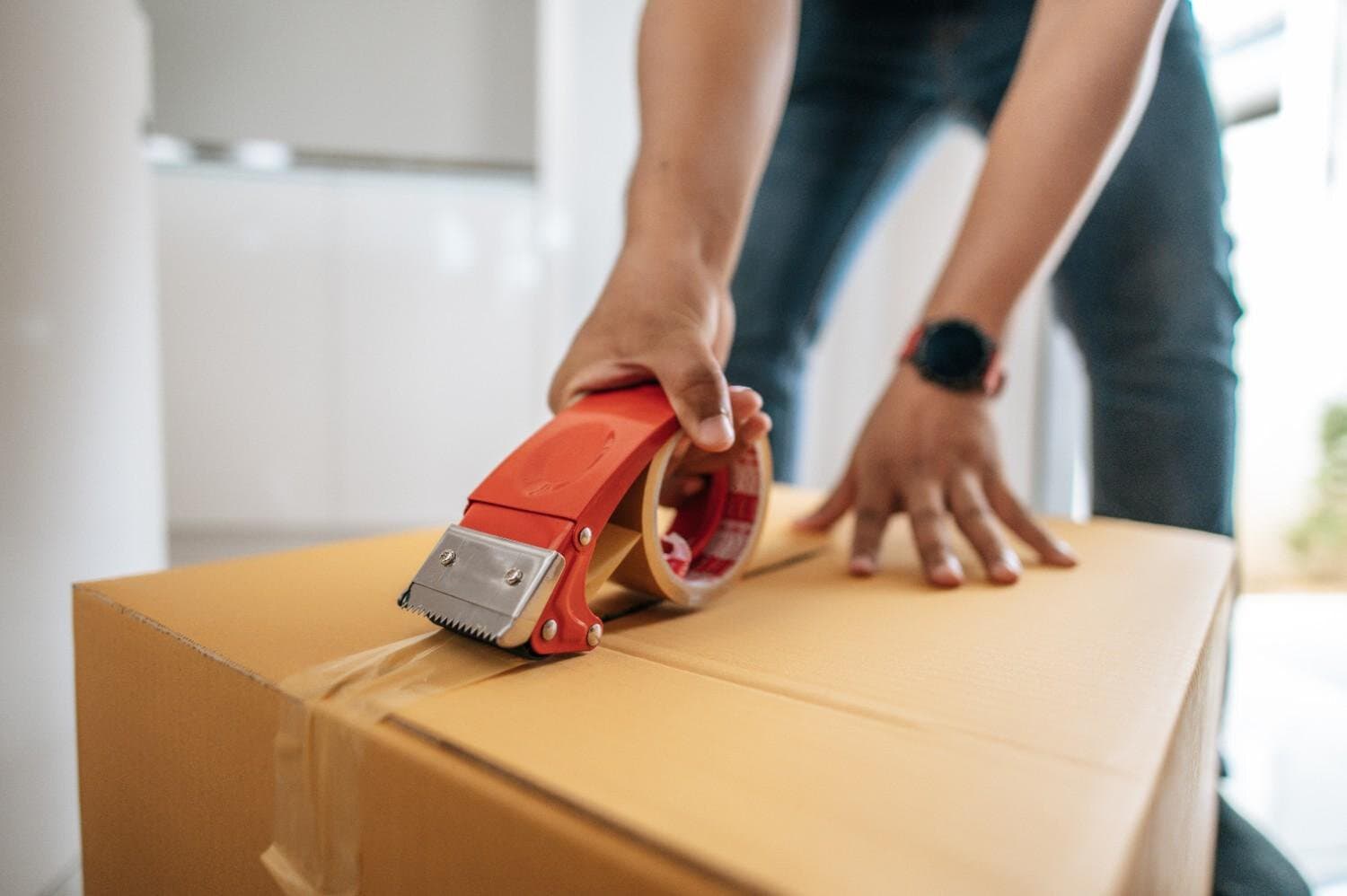
Heavy items belong in small boxes. A large box packed with books can pass 70 pounds, which is unsafe to lift and likely to fail at the bottom seam. If you cannot carry a box ten steps comfortably, repack it. Tape every carton along the bottom seam and across it in an H pattern.
Items break because they move inside the box, not because the box is dropped. Line the bottom with crumpled paper, wrap each fragile piece individually, then stuff paper into every gap until nothing shifts when you shake the closed box. Heaviest pieces on the bottom, lightest on top.
Write on two sides, never only the top, since the top disappears the moment something is stacked on it. Include the destination room, a short contents summary, and FRAGILE where it applies. Numbering boxes and keeping the list on your phone makes it obvious at delivery if something is missing.
Stand plates on their edge like records rather than flat, since a flat stack puts the weight of the whole pile on the bottom plate. Wrap glasses individually, fill each one with paper, and never let glass touch glass.
Original boxes are best if you kept them. Otherwise wrap the unit in bubble wrap inside a snug carton, upright. Bag cables and label the bag for the device. Screens travel on edge, never flat with weight on top.
Leave folded clothes in dresser drawers when the crew is moving the dresser as a unit, and use wardrobe boxes for anything hanging. Towels and blankets are useful padding around fragile items rather than dead weight in a box of their own.
Tape a large X across the glass so it holds together if it cracks, then wrap the piece in paper with cardboard corners and move it in a picture box or between two flattened cartons. Framed pieces always travel vertically.
Remove legs, shelves, and hardware where possible and bag the fasteners taped to the underside of the piece they came from. Stretch wrap keeps upholstery clean, but do not seal solid wood in plastic for a long haul, since trapped moisture can mark the finish.
Two categories never travel with the rest of the load. The first is hazardous and perishable goods: fuel, propane, aerosols, paint, pool chemicals, ammunition, solvents, and open food cannot ride on a household goods truck. The FMCSA is explicit that packing perishable, dangerous, or hazardous materials into your shipment without the mover’s knowledge is one of the actions that can limit your mover’s liability. Use up what you can and take the rest to a collection site. The EPA notes that paints, cleaners, oils, batteries, and pesticides need special handling, and that many communities run household hazardous waste collection programs for exactly this.
The second is anything irreplaceable. Passports, birth certificates, titles, tax records, jewelry, cash, prescriptions, laptops, and small heirlooms belong in a bag that stays with you. On interstate moves, items worth more than $100 per pound count as articles of extraordinary value, and unless you list them specifically on the shipping documents your mover can limit its responsibility for them. Worth knowing too: boxes you pack yourself are harder to claim on than boxes packed by the crew, which is a fair reason to let professionals handle the china cabinet.
Plan on one full day per room working alone, or two to three weeks of evenings for an average three bedroom home. A professional crew typically packs the same home in one or two days.
A studio usually needs 15 to 25 boxes, a two bedroom home 40 to 60, and a four bedroom home well over 100. Buy about 20 percent more than your estimate and return what you do not open.
Packing yourself saves on labor. Paying for it saves time and shifts responsibility for how fragile items were wrapped onto the mover, which matters if you file a claim. Many people split it and have the crew pack only the kitchen.
Usually yes for folded clothing in a sturdy dresser on a local move. Empty the drawers for a long distance move or for antique and particleboard furniture, since the extra weight stresses the joints in transit.
Two days of clothing, toiletries, medication, chargers, basic tools, toilet paper, paper towels, bedding, a shower curtain, snacks, and anything a child or pet needs. Load it last so it comes off first.
Yes. A numbered inventory is the only quick way to confirm at delivery that every box that left arrived.
Good packing comes down to starting early, buying real boxes, working room by room, filling every gap, and keeping the irreplaceable things in your own car.
If you would rather not spend three weekends wrapping glassware, a professional crew can pack all or part of your home and take responsibility for how it travels. Reach out for a free estimate and ask what a full pack and a partial pack would cost for your home.

Instant Move Estimate
Get Answers, Book Today


